There is a specific, low-grade hum of anxiety that defines modern life. It isn’t just the news, or the economy, or the shifting climate. It is the gnawing sense that we are constantly missing something, or that our next move might be the one that unlocks a fleeting sense of stability. We live in an era of deep, structural uncertainty. Consequently, we have become addicted to interfaces that promise to turn that chaos into something manageable.
When we talk about the attention economy, we often focus on the "what"—the content, the memes, the videos. We ignore the "how." The "how" is a reward structure that mirrors gambling, stripped of the chips and the green felt but retaining the neurochemical hook. This isn't accidental. It is architected.. Exactly.
Think of it like a vending machine versus a claw machine. A vending machine is a transaction: you input currency, you get a snack. It’s boring, but it’s fair. A claw machine, however, is a negotiation with chance. You aren’t paying for a snack; you are paying for the *possibility* of a snack. Modern digital design has successfully replaced the vending machine with the claw machine, and we have been conditioned to prefer the grip of the claw over the reliability of the button.
Structured Uncertainty vs. Chaos
Chaos is terrifying because it has no rules. If you walk into a dark room and the floor is uneven, you feel anxious. But if someone gives you a map of the room, even if the room is still messy, you feel like you have agency. This is the difference between genuine instability and "structured uncertainty."
Social media rewards operate within this frame of structured uncertainty. When you refresh your feed, you are entering a game. You do not know if the next post will be a boring advertisement, a photo of a friend’s dinner, or the dopamine hit of a viral trend. This is intermittent reinforcement. If the reward were consistent—if every post was a hit—you would get bored. By making the reward unpredictable, the platforms ensure that the act of "refreshing" becomes its own, self-contained activity.
This is where I must draw the line between choice and design https://varimail.com/articles/the-architecture-of-the-itch-how-apps-engineer-the-feedback-loop/ pressure. We tell ourselves we *choose* to open these apps. But when an interface is built to minimize friction—when the "pull to refresh" motion is perfectly weighted and the visual feedback is designed to be tactile—you aren't making a choice. You are responding to a nudge. You are reacting to a design pressure that has removed the effort required to make a conscious decision.
The Mechanics of Gamification
Gamification is a word that should be treated with suspicion. It implies that everything is a game, and games are inherently fun. In reality, modern gamification is often just the extraction of labor through artificial goal-setting. It creates a closed loop where the only way to achieve "fairness" or "success" is to remain inside the system.
Look at how we value participation. Whether it’s a loyalty program, a fitness tracker, or a social media engagement metric, the rules are always arbitrary. The platform decides what counts as a "win."
Comparison of Reward Structures
Mechanism Goal Player Perception Design Reality Infinite Scroll Retention "Just one more video." Exploiting search-behavior loops. Streaks/Badges Consistency "I’m achieving a goal." Leveraging loss aversion. Notifications Re-engagement "I’m being updated." Triggering impulsive responses.The rules of these systems are designed to feel fair, even when they aren't. Fairness, in this context, is simply the belief that if you perform the actions, you will receive the outcome. When we hit a "streak" on an app, we feel we have earned it. We feel a sense of agency. We forget that the system set the rules, defined the streak, and determined the benefit of maintaining it.
Live Dealer-Led Experiences: The Illusion of Presence
One of the most fascinating evolutions in this space is the rise of live dealer-led experiences. We see this in gambling, obviously, but we also see it in the explosion of "live" shopping events, streamers reacting to content in real-time, and influencers hosting "Ask Me Anything" sessions.
Why do we find these experiences so compelling? Because they offer a simulated social contract. In a world of cold, algorithmic curation, a human voice—even one mediated by a screen and a pay-to-play interface—feels like a return to authenticity. It provides the "live" element of a game, where you can watch the dice roll or the cards flip in real-time.
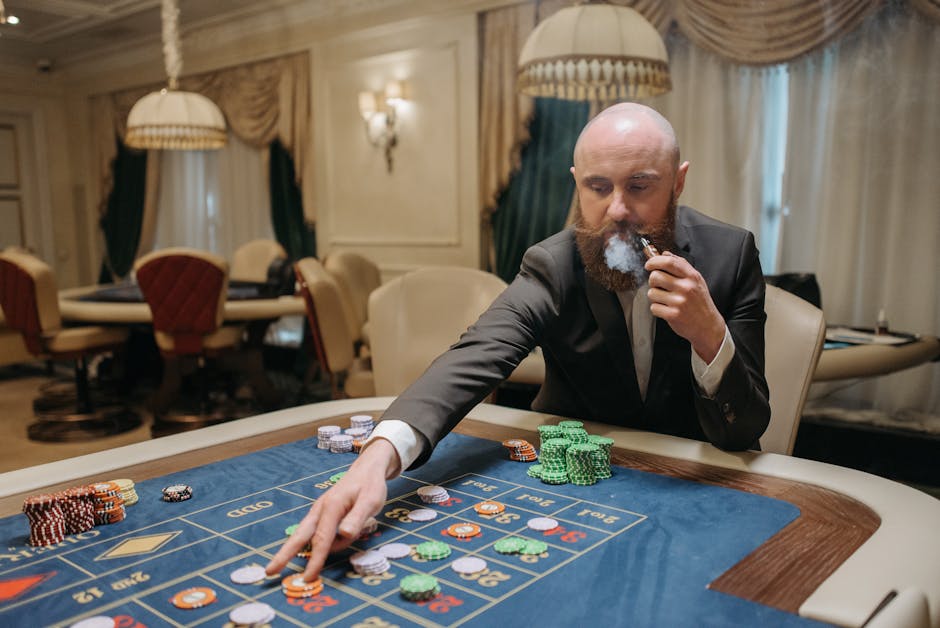
However, this is largely performative. The dealer is following a script, the streamers are optimizing for a specific reaction, and the mobile-friendly interfaces are keeping the metrics front and center. We are drawn to these experiences because they satisfy our hunger for narrative. We want to believe that we are in a room with someone, experiencing the same moment of tension. It masks the reality that we are, once again, just nodes in an attention economy.
The Illusion of Agency
The danger of these reward structures isn't that they are "evil." It is that they are effective at replacing actual, offline agency with a simulated version. When you feel a sense of accomplishment after managing your digital presence, you are effectively trading your real-world agency for a structured, platform-dependent win.
We see this most clearly in the way we handle our digital boundaries. We set rules for ourselves—"I won't check my phone after 9 PM"—but the design pressure of these systems is designed to bypass our prefrontal cortex. The notifications, the badges, the ephemeral "Stories" that disappear if you don't watch them—these are designed to create a sense of urgency that overrides our boundaries.

True agency requires the ability to disconnect without feeling like you are losing the game. In the current attention economy, disconnecting is framed as "missing out." That fear is the final piece of the reward structure. It tells you that if you leave the room, the claw might have grabbed the prize while you weren't looking.
Conclusion: Redefining the Win
If we want to reclaim our attention, we have to stop viewing digital interaction as a series of small, benign games. We need to acknowledge that these systems were never designed for our benefit; they were designed for our engagement.
When you feel the urge to "check in," ask yourself what game you are playing. Are you looking for information, or are you looking for the reward of the refresh? Are you acting out of your own choice, or are you bowing to the design pressure of an interface that has been tuned to keep you in a state of mild, manageable uncertainty?
The world is uncertain enough. We don't need our pockets to be stuffed with artificial games that https://reliabless.com/the-architecture-of-the-one-more-moment-how-your-screen-keeps-you-hooked/ make us feel like we’re losing if we aren't constantly engaged. The best way to win the game, ultimately, is to realize that you never had to play it in the first place.